When to Prime and Which Primer to Use
All paints have four main ingredients; pigment provides color, coverage, and gloss control; binders bind the pigment together and provide film integrity and adhesion to a surface; liquid, also known as the solvent, provides desired consistency and makes it possible to apply the pigment and binders to the surface; additives are ingredients that provide specific paint properties such as mildew resistance and good flow and leveling. In order for paint to perform optimally, a primer is necessary in many cases. Primers are problem solvers that are less like paint and more like glue; they stick to whatever you’re prepping and seal the substrate to ensure a good uniform finish that adheres to the surface.
WHEN SHOULD YOU PRIME?
For interior walls, priming is only necessary in the case of stains, repairs, remodeling, or when painting a color that’s drastically different to the existing color. Whether painting drywall, plaster, woodwork or other interior surfaces, priming ensures the surface is sealed so the finish paint can adhere and dry to a smooth uniform finish.
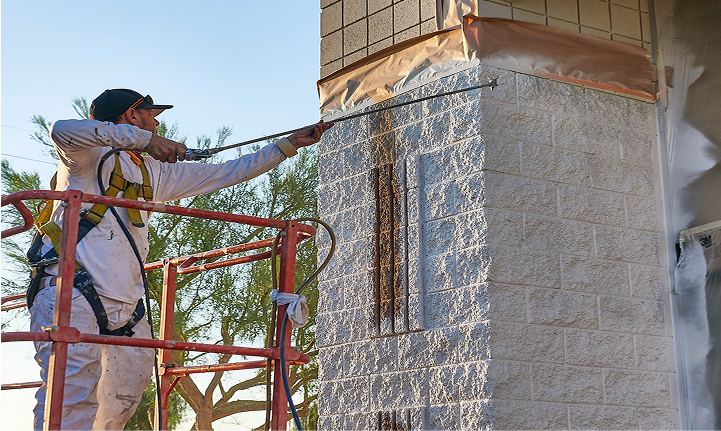
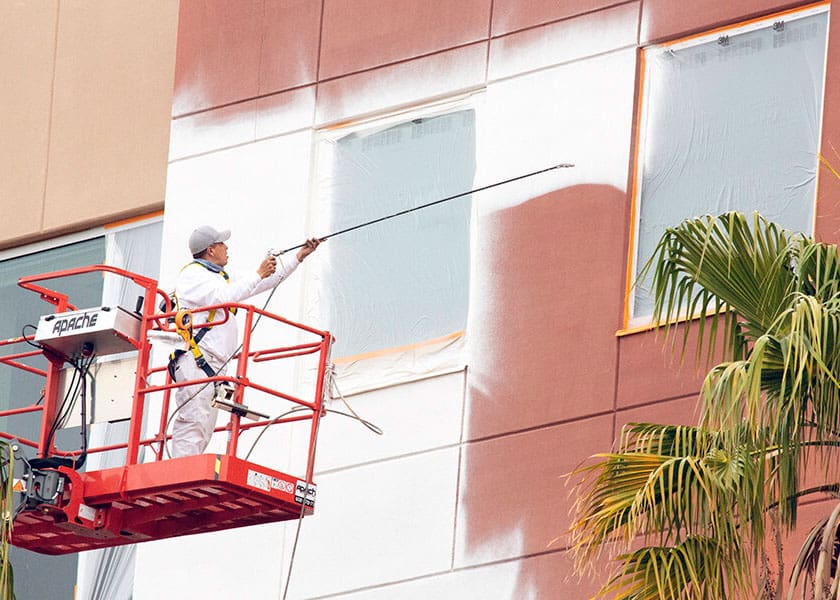
Exterior painting almost always requires the use of a primer as these surfaces are constantly subjected to harsh conditions such as moisture and UV rays. This exposure will cause these surfaces to deteriorate making paint adhesion difficult. Primers are always recommended when painting exterior surfaces such as wood, masonry, metal. In addition to providing good adhesion, exterior primers are formulated to deal with specific conditions such as efflorescence on masonry or tannin staining on cedar and redwoods.
WHICH PRIMERS SHOULD YOU USE?
There is a perfect primer for almost any surface, and often the results with a primed surface add a more professional finish for your clients. So, which one should you use? Below are some examples of how you can match a primer to the surface of your choice. The following recommendations are ideally suited for repaint and/or maintenance painting projects. When dealing with paint specifications on new construction projects, more careful considerations must be given to primer selection.
- Interior Stains and Odors:Some stains will bleed through most primer and paints no matter how many coats are applied. The same applies for severe odors like smoke from fires or cigarettes. The solution is a stain blocking primer such as BLOCK-IT Premium.
- Drywall Repairs:Drywall paper and various drywall muds used for repair work absorb paint differently. This will result in blotchy, dull areas under the paint and an inconsistent sheen. The solution is to seal the drywall using a primer-sealer such as VINYLASTIC Premium.
- New Wood:Whether you wood has serious tannin staining, or it simply requires a good primer before painting, use a premium wood primer such as EZ-PRIME Premium.
- Masonry:To promote excellent adhesion to surfaces such as stucco, brick, or concrete block, and provide resistance to alkali and efflorescence, use an epoxy-fortified primer such as EFF-STOP Premium for porous masonry.
- Concrete Block:For a smoother finish on block, fill this porous surface with a block filler before painting. If repainting, scrape off any loose or peeling paint and cover with latex paint. Use a block filler such as Smooth Blocfil Premium only if the paint has been completely scraped off/removed.
- Metal:If your surface is rusty, remove the rust and apply a corrosion-resistant primer such as BLOC-RUST for ferrous metals or GALV-ALUM for galvanized metal and aluminum surfaces.
Source: Dunn-Edwards Paints. "Under the Lid"